In today’s digital world, customers no longer respond well to aggressive advertising. Instead, they prefer brands that educate, inform, and help them make better decisions. This shift in customer behavior has made content marketing one of the most powerful and essential digital marketing strategies.
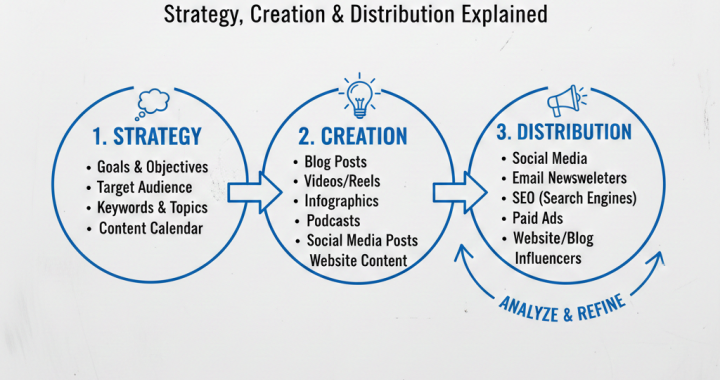
Content marketing is not just about writing blogs or posting on social media. It is a structured process that involves planning a strategy, creating valuable content, and distributing it through the right channels. When done correctly, content marketing builds trust, attracts the right audience, and drives long-term business growth.
This blog explains how content marketing works, covering its strategy, content creation process, and distribution methods in detail.
1. What Is Content Marketing?
Content marketing is a marketing approach focused on creating and sharing valuable, relevant, and consistent content to attract and retain a clearly defined audience.:
Solves problems
Answers questions
Educates audiences
Builds relationships
2. Why Content Marketing Is Important
Before understanding how content marketing works, it’s important to know why it matters.
Content marketing helps businesses:
Build brand authority
Increase website traffic
Generate quality leads
Improve SEO performance
Build customer trust
In the digital age, content is the bridge between brands and customers.
Distribution – Sharing content through the right channels
Let’s explore each pillar in detail.
PART 1: CONTENT MARKETING STRATEGY 4. What Is a Content Marketing Strategy?
A content marketing strategy is a clear plan that defines:
Business goals
Target audience
Content types
Platforms
Measurement metrics
Without strategy, content becomes random and ineffective.
5. Setting Clear Content Marketing Goals
Every content marketing strategy starts with goals. Common goals include:
Increasing brand awareness
Driving website traffic
Generating leads
Building trust
Supporting sales
Clear goals help measure success and guide content decisions.
6. Understanding Your Target Audience
Content marketing works only when it speaks to the right audience. Understanding your audience involves:
Age group
Interests
Pain points
Online behavior
Creating buyer personas helps align content with audience needs.
7. Choosing the Right Content Topics
Topic selection is critical. Good content topics:
Solve problems
Answer common questions
Match search intent
Align with business goals
Research tools, customer feedback, and industry trends help identify relevant topics.
8. Keyword Research and SEO Planning
SEO plays a major role in content marketing. Keyword research helps:
Identify what people are searching for
Create search-friendly content
Improve organic visibility
Optimizing content for search engines ensures long-term traffic.
9. Content Planning and Calendar
A content calendar helps plan:
What to publish
When to publish
Where to publish
This improves consistency and avoids last-minute content creation.
PART 2: CONTENT CREATION PROCESS 10. What Is Content Creation?
the process of producing and sharing valuable, engaging material (text, video, audio, images) to attract, inform, entertain, or inspire a specific audience
11. Types of Content in Content Marketing
Content marketing includes various content formats such as:
Blog articles
Videos
Infographics
Social media posts
Case studies
Ebooks
Different formats serve different audience preferences.
12. Creating High-Quality Content
High-quality content:
Solves real problems
Is easy to understand
Provides unique insights
Uses clear structure
Quality always matters more than quantity.
13. Content Writing Best Practices
Effective content writing includes:
Clear headlines
Simple language
Short paragraphs
Logical flow
Good writing keeps readers engaged and improves readability.
14. Visual Content Creation
Visual content enhances content marketing by:
Increasing engagement
Improving understanding
Making content shareable
15. Maintaining Consistency and Brand Voice
Consistency builds brand identity. This includes:
Tone of voice
Style
Messaging
Consistent content builds trust and recognition over time.
16. Content Optimization for SEO and Users
Content should be optimized for:
Search engines
Mobile devices
User experience
Optimized content performs better and reaches wider audiences.
PART 3: CONTENT DISTRIBUTION 17. What Is Content Distribution?
the strategic process of promoting and sharing your created content (blogs, videos, podcasts, etc.) across various channels to ensure it reaches and engages your target audience, maximizing its visibility and impact beyond just publishing it
18. Owned Content Distribution Channels
Owned channels are platforms you control, such as:
Website
Blog
Email newsletters
These channels build long-term audience relationships.
19. Social Media Content Distribution
Social media is a powerful content distribution channel. It helps:
Expand reach
Increase engagement
Drive traffic
Each platform requires content adapted to its format.
Measuring performance helps improve strategies. Important metrics include:
Website traffic
Engagement rate
Lead generation
Conversion rate
Data helps refine content efforts.
25. Using Analytics Tools
Analytics tools provide insights into:
Audience behavior
Content performance
Improvement areas
Tracking data leads to better results.
26. Common Content Marketing Mistakes to Avoid
Creating content without strategy
Ignoring audience needs
Posting inconsistently
Not promoting content
Avoiding these mistakes improves success.
27. How Beginners Can Start Content Marketing
Beginners should:
Define goals
Understand the audience
Start with blogs and social posts
Focus on quality
Track performance
Small, consistent steps lead to growth.
28. The Future of Content Marketing
The future of content marketing will focus on:
Personalized content
Video-first strategies
Interactive content
AI-assisted creation
Businesses that adapt early will gain an advantage.
Final Thoughts
Content marketing works through a well-planned strategy, thoughtful content creation, and effective distribution. It is not about selling aggressively but about building trust, educating audiences, and providing value.