waether it is a small local shop or a large multinational company, marketing helps businesses reach their target audience, build brand awareness, and increase sales. Over the years, marketing methods have evolved significantly. Earlier, businesses relied heavily on traditional marketing, but today digital marketing has become the preferred choice for many brands.
Both traditional marketing and digital marketing have their own advantages, limitations, and use cases. Understanding the key differences between them is essential for businesses to choose the right strategy. In this blog, we will explore traditional marketing and digital marketing in detail and compare them across various factors such as cost, reach, targeting, engagement, and measurability.
What Is Traditional Marketing?
Traditional marketing refers to conventional marketing methods that have been used for decades to promote products and services. These methods primarily rely on offline channels to reach customers.
Common Examples of Traditional Marketing:
Newspaper advertisements
Television commercials
Radio ads
Billboards and hoardings
Flyers, brochures, and pamphlets
Magazines
Direct mail marketing
Event sponsorships
Traditional marketing focuses on mass communication, where a single message is delivered to a broad audience. It is often used to build brand recognition and credibility, especially in local or regional markets.
What Is Digital Marketing?
Digital marketing refers to promoting products and services using online platforms and digital technologies. It allows businesses to connect with their audience through the internet and electronic devices such as smartphones, tablets, and computers.
Common Examples of Digital Marketing:
Search Engine Optimization (SEO)
Social Media Marketing (SMM)
Google Ads and paid advertising
Email marketing
Content marketing (blogs, videos, infographics)
Influencer marketing
Affiliate marketing
Website and app marketing
Digital marketing is data-driven, highly targeted, and interactive. It enables businesses to communicate with customers in real time and measure the performance of their campaigns accurately.
Key Differences Between Traditional Marketing and Digital Marketing
Let’s explore the major differences between traditional marketing and digital marketing across various aspects.
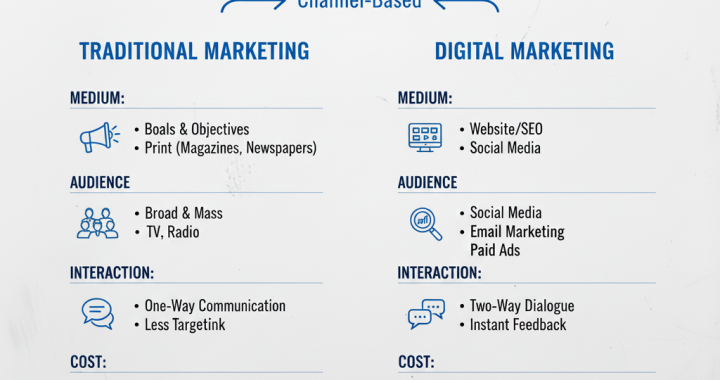
1. Mode of Communication
Traditional Marketing: Traditional marketing uses offline communication channels such as print, TV, radio, and outdoor advertising. Communication is mostly one-way, where brands deliver messages but do not receive immediate feedback from customers.
Digital Marketing: Communication is two-way, allowing users to interact, comment, share, and respond instantly.
2. Reach and Audience Size
Traditional Marketing: The reach of traditional marketing is usually limited to a specific geographic area. For example, a newspaper ad will mostly reach readers in a particular city or region.
Digital Marketing: Digital marketing offers global reach. A single online campaign can reach users across countries and continents, making it ideal for businesses looking to expand their audience.
3. Targeting Capabilities
Traditional Marketing: Targeting options are limited. Businesses often advertise to a broad audience, even if many viewers are not interested in the product.
Digital Marketing: Digital marketing allows precise targeting based on:
Age
Gender
Location
Interests
Behavior
Search history
This ensures that marketing messages reach the most relevant audience.
4. Cost and Budget
Traditional Marketing: Traditional marketing is generally more expensive. TV commercials, newspaper ads, and billboards require a significant budget, making them less suitable for small businesses.
Digital Marketing: Digital marketing is cost-effective and flexible. Even startups can compete with larger brands online.
5. Measurability and Analytics
Traditional Marketing: Measuring results is difficult. Businesses often rely on estimates, surveys, or assumptions to judge campaign performance.
Digital Marketing: Digital marketing provides accurate data and analytics. Businesses can track:
Website traffic
Click-through rates
Conversion rates
Engagement levels
Return on investment (ROI)
This helps in optimizing campaigns for better results.
6. Customer Engagement
Traditional Marketing: Engagement is minimal. Customers usually consume the message passively, with limited interaction opportunities.
Digital Marketing: Digital marketing encourages active engagement through likes, comments, shares, reviews, polls, and messages. This helps build stronger relationships with customers.
7. Speed and Flexibility
Traditional Marketing: Campaigns take more time to create, publish, and modify. Once an ad is printed or aired, changes are difficult and costly.
Digital Marketing: Digital marketing is fast and flexible. Campaigns can be launched, paused, edited, or optimized instantly based on performance.
8. Personalization
Traditional Marketing: Personalization is limited. Most traditional ads are generic and aimed at a wide audience.
Digital Marketing: Digital marketing allows highly personalized content, such as personalized emails, product recommendations, and targeted ads based on user behavior.
9. Longevity of Content
Traditional Marketing: Traditional ads have a short lifespan. A newspaper ad lasts for a day, and a TV ad disappears once the slot ends.
Digital Marketing: Digital content such as blogs, videos, and social posts can stay online for years and continue generating traffic and leads over time.
10. Brand Trust and Credibility
Traditional Marketing: Traditional marketing is often perceived as more trustworthy, especially by older audiences. Print and TV ads create a strong sense of brand authority.
Digital Marketing: Digital marketing builds trust through reviews, testimonials, influencer collaborations, and consistent online presence. However, it requires authenticity and transparency.
Advantages of Traditional Marketing
Strong local reach
Builds brand credibility
Effective for offline audiences
Easy to understand and familiar
Ideal for mass awareness campaigns
Advantages of Digital Marketing
Cost-effective and scalable
Highly targeted campaigns
Real-time analytics and tracking
Better customer engagement
Global reach
Easy personalization
Quick campaign adjustments
Limitations of Traditional Marketing
High cost
Limited targeting
Difficult to measure ROI
One-way communication
Less flexibility
Limitations of Digital Marketing
Requires technical knowledge
High competition online
Dependence on internet access
Privacy and data security concerns
Constant updates and changes in algorithms
Which Marketing Is Better?
Business goals
Target audience
Budget
Industry type
Geographic location
For example:
Local businesses may benefit from traditional marketing combined with digital efforts.
Online businesses and startups usually find digital marketing more effective.
Large brands often use integrated marketing, combining both approaches for maximum impact.
Conclusion
Traditional marketing and digital marketing both play important roles in today’s business environment. While traditional marketing offers credibility and strong local presence, digital marketing provides cost efficiency, precise targeting, and measurable results.
In the modern era, digital marketing has become essential due to the increasing use of the internet and smartphones. However, businesses should not completely ignore traditional marketing. The most successful brands use a balanced marketing strategy, combining the strengths of both traditional and digital marketing to achieve long-term success.
By understanding the key differences between traditional marketing and digital marketing, businesses can make informed decisions and create effective marketing strategies that deliver real results.
If you want, I can:
Optimize this blog for SEO
Add meta title & meta description
Rewrite it for a more conversational or professional tone
Add images suggestions & FAQs
Customize it for Indian market or small businesses