Whether you are a startup owner, a marketing student, or a business looking to expand online, understanding how digital marketing works is essential. Unlike traditional marketing, digital marketing relies on data, technology, and user behavior to reach the right audience at the right time.
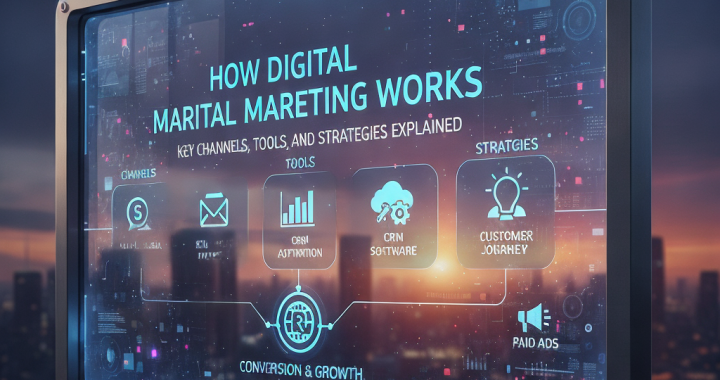
This blog explains the core working process of digital marketing, its key channels, the tools marketers use, and the strategies that turn traffic into customers. By the end, you will have a clear picture of how digital marketing functions as a complete system.
1. What Is Digital Marketing?
Digital marketing is the use of online platforms, technologies, and digital channels to promote products or services. It focuses on reaching customers through the internet using devices such as smartphones, laptops, and tablets.
Digital marketing works by:
Identifying target audiences
Delivering relevant content or ads
Tracking user behavior
Optimizing campaigns for better results
Unlike offline marketing, digital marketing is measurable, flexible, and scalable.
2. The Core Working Model of Digital Marketing
Digital marketing operates in a cycle rather than a one-time action. The typical process includes:
Research and planning
Channel selection
Content or ad creation
Campaign execution
Tracking and analysis
Optimization and scaling
Each step improves the next, making digital marketing a continuous improvement system.
3. Understanding the Digital Marketing Funnel
Digital marketing works around the customer journey, often referred to as the marketing funnel:
Awareness Stage
People discover your brand through search engines, social media, or ads.
Consideration Stage
Users research your product, read blogs, watch videos, or compare options.
Conversion Stage
The user takes action — purchasing, signing up, or contacting you.
Retention Stage
Businesses engage customers through email, support, and value-driven content.
Digital marketing strategies are designed to support each stage of this funnel.
SEO helps websites appear in organic search results when users search for relevant queries.
How SEO works:
Keyword research
Content optimization
Technical website improvements
Link building
SEO brings long-term traffic and builds trust.
4.2 Pay-Per-Click Advertising (PPC)
PPC allows businesses to display ads on search engines or websites and pay only when users click.
How PPC works:
Keyword bidding
Ad creation
Landing page optimization
Performance tracking
PPC provides immediate visibility and fast results.
4.3 Social Media Marketing (SMM)
Social media marketing promotes brands through platforms like Instagram, Facebook, LinkedIn, and X.
How SMM works:
Content posting
Audience engagement
Paid social ads
Analytics tracking
Social media builds relationships and brand awareness.
4.4 Content Marketing
Content marketing focuses on creating valuable content to attract and retain customers.
Examples:
Blogs
Videos
Infographics
Ebooks
Content educates users and supports other digital channels.
4.5 Email Marketing
Email marketing nurtures leads and retains customers through personalized messages.
How email marketing works:
Email list building
Segmentation
Automation
Performance tracking
4.6 Affiliate Marketing
Affiliate marketing involves third parties promoting your product for a commission.
How it works:
Affiliate links
Tracking systems
Performance-based payments
It expands reach without upfront ad costs.
4.7 Influencer Marketing
Influencer marketing leverages trusted individuals to promote products.
How it works:
Influencer selection
Content collaboration
Performance measurement
Influencers help brands reach niche audiences.
4.8 Mobile Marketing
Mobile marketing targets users on smartphones through apps, SMS, and mobile-friendly websites.
Why it matters:
Mobile usage dominates internet access
Higher engagement rates
5. Digital Marketing Tools That Make It Work
Tools are essential to manage, analyze, and optimize digital marketing campaigns.
5.1 Analytics Tools
Track website traffic
Measure conversions
Understand user behavior
5.2 SEO Tools
Keyword research
Competitor analysis
Site audits
5.3 Social Media Tools
Content scheduling
Engagement tracking
Performance reporting
5.4 Email Marketing Tools
Automation
List segmentation
Campaign analytics
5.5 Advertising Tools
Ad creation
Budget control
Conversion tracking
These tools help marketers make data-driven decisions.
6. Digital Marketing Strategies Explained Strategy 1: Audience-First Approach
Understanding the audience’s needs, behavior, and pain points is the foundation of success.
Strategy 2: Omnichannel Marketing
Using multiple channels together improves reach and consistency.
Strategy 3: Content-Driven Growth
Valuable content builds trust and long-term relationships.
Strategy 4: Data-Driven Optimization
Analytics guide improvements and reduce wasted efforts.
Strategy 5: Personalization
Customized messages increase engagement and conversions.
7. How Digital Marketing Converts Visitors into Customers
Digital marketing works by guiding users through a structured journey:
Attract visitors
Build trust with content
Offer value through solutions
Encourage action
Maintain long-term engagement
Each step is supported by digital tools and strategies.
8. Role of Automation in Digital Marketing
Automation improves efficiency and consistency.
Examples:
Automated email sequences
Chatbots
Lead scoring
Automation saves time while improving user experience.
9. Measuring Digital Marketing Success
Key performance indicators include:
Traffic
Engagement
Leads
Conversions
ROI
Tracking ensures strategies remain effective.
10. Common Digital Marketing Mistakes to Avoid
No clear strategy
Ignoring analytics
Poor targeting
Inconsistent branding
Avoiding these mistakes improves results.
11. How Beginners Can Start Digital Marketing
Learn the basics
Choose 1–2 channels
Practice consistently
Analyze and improve
Digital marketing success comes from continuous learning.
12. The Future of How Digital Marketing Works
Digital marketing will become more:
Personalized
Automated
Data-driven
Customer-centric
Understanding the working system today prepares businesses for the future.
Final Thoughts
Digital marketing works as an interconnected system of channels, tools, and strategies. When used correctly, it helps businesses attract the right audience, build trust, and drive growth in a measurable and scalable way.
For beginners, mastering the basics is the key to long-term success in the digital world.