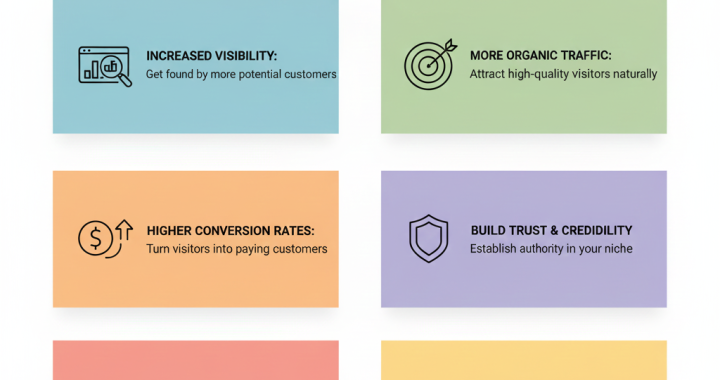
Millions of websites exist on the internet, all competing for attention. If your website does not appear on search engines when users look for products, services, or information related to your business, you are losing valuable opportunities every day.
SEO is not just a marketing tactic; it is a long-term strategy that helps websites gain visibility, credibility, and sustainable growth.
In this blog, we will explore why SEO is important for websites and online businesses, how it works, and why every beginner and business owner should understand its value.
1. SEO Helps Your Website Get Discovered Online
When people need answers, products, or services, they type queries into search engines like Google.
SEO helps your website:
Appear in relevant search results
Reach users actively searching for solutions
Increase organic (free) traffic
Why this matters: Visibility is the first step toward online success.
2. SEO Drives High-Quality Organic Traffic
Unlike paid advertising, SEO focuses on attracting users organically. Organic traffic consists of people who are genuinely interested in what your website offers.
SEO targets:
Relevant keywords
Search intent
User needs
This means visitors coming through SEO are more likely to engage, convert, and return.
Business benefit: Higher quality traffic leads to better conversion rates.
3. SEO Builds Trust and Credibility
Users trust search engines. Websites that rank higher are often perceived as more reliable and authoritative.
SEO builds trust through:
High-quality content
Secure websites
Positive user experience
Backlinks from trusted sources
Over time, SEO helps establish your brand as an authority in your industry.
Why trust matters: People buy from brands they trust.
4. SEO Is Cost-Effective Compared to Paid Marketing
While paid ads stop generating traffic once the budget ends, SEO continues to deliver results over time.
SEO:
Requires investment in strategy and content
Delivers long-term benefits
Reduces dependency on ads
For small businesses and startups, SEO provides a sustainable way to compete online.
Long-term advantage: Lower cost per lead and higher ROI.
5. SEO Improves User Experience
Modern SEO is not just about keywords; it focuses heavily on user experience.
SEO encourages:
Fast page loading
Mobile-friendly design
Easy navigation
High-quality content
Search engines reward websites that offer a smooth and valuable user experience
6. SEO Helps You Stay Competitive
Your competitors are already using SEO. If your business ignores SEO, you give competitors a major advantage.
SEO allows businesses to:
Analyze competitor strategies
Identify content gaps
Improve positioning
Staying competitive in the digital age requires consistent SEO efforts.
Key takeaway: SEO is no longer optional—it’s a necessity.
7. SEO Supports Long-Term Business Growth
SEO builds digital assets such as:
Optimized content
Website authority
Brand visibility
These assets grow stronger over time, delivering continuous traffic and leads.
Unlike short-term marketing tactics, SEO focuses on sustainable growth.
Business impact: SEO supports stability and scalability.
8. SEO Helps Target Local and Global Customers
SEO can be customized for:
Local businesses
National brands
International markets
Local SEO helps businesses appear in location-based searches, while global SEO helps reach international audiences.
Why this matters: SEO removes geographic limitations.
9. SEO Aligns with Consumer Behavior
Today’s consumers research before making decisions. They:
Read blogs
Compare options
Check reviews
SEO ensures your website appears at every stage of the customer journey.
Result: Better engagement and informed customers.
10. SEO Delivers Measurable Results
Businesses can track:
Organic traffic
Keyword rankings
User behavior
Conversion rates
This data helps improve strategies and maximize results.